
- Commercial Greenhouse
- Film Greenhouse
- PC Greenhouse
- Glass Greenhouse
- Tunnel Greenhouse
- Scientific Research Greenhouse
- Vegetable Greenhouse
- Flower Greenhouse
- Multi-span Greenhouse
- Sawtooth Greenhouse
- Greenhouse Equipments
- Greenhouse Accessories
- Hot Dip Galvanized Pipe
- Irrigation System
- Hydroponics System
- Planting Tools
- Planting technology
Tel: +86 191 5068 3942
Fax:
Mobile: +86 191 5068 3942
Contact: Alina
E-mail: sales@cngreenhouses.com
SKYPE:


Commercial Film Greenhouse Cost - Budget Tiers Explained
Commercial film greenhouse cost guide: 6.4-10 m spans, 4.3-6.5 m height, single or double film layer, and the six budget lines to check in a quotation.
.
TEL:+86 191 5068 3942
- Features


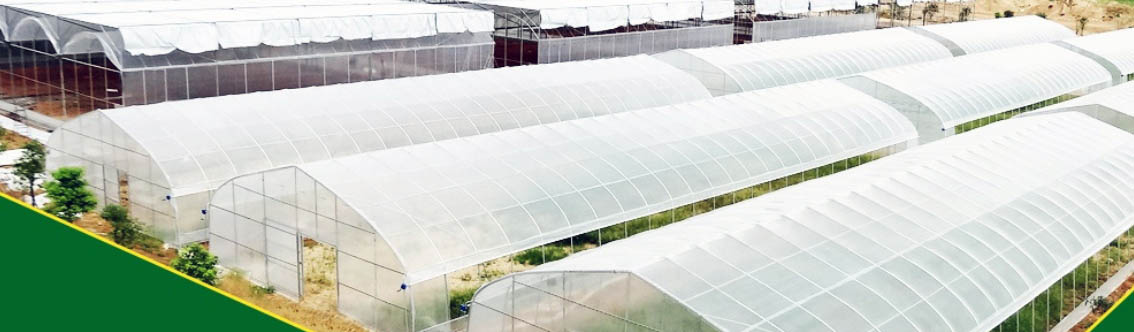
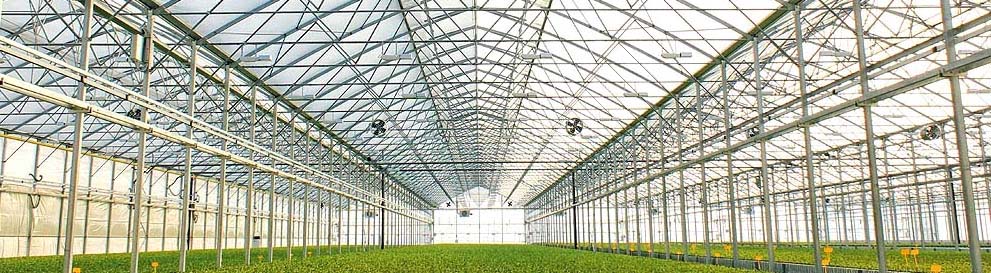
Also known as an agricultural plastic poly film greenhouse, this is a single-span film house built for commercial growing. The frame is hot dip galvanized steel pipe carrying an arch roof, and the covering is clear polyethylene film locked into a grooved channel frame with aluminium clips. It is designed for a single or a double layer of greenhouse film, and it is arranged so the film can be cut to the exact length of each house.
What a Film Greenhouse Quotation Is Actually Buying
Two quotations that describe what looks like the same film house can land a long way apart, because a greenhouse of this kind is priced from the steel and the film outwards, not from floor area alone. The frame decides the load the house can carry and the life it will give; the film decides the light, the insulation and how often the cover has to be renewed. Everything else added to the shell is a separate system with its own line.
That is why the useful comparison is never the total at the bottom of the page. The six items below are the ones that actually move a film greenhouse budget, and they are the ones to put side by side before anything is signed.
Six Things That Move the Budget
| 1) | Span, height and run length. Houses in this range are built on 6.4 m, 8 m, 9.6 m and 10 m spans, with a total structure height of 4.3 m to 6.5 m. A wider span and a taller shoulder lengthen every arch and purlin and widen every metre of film, so the same span quoted over a different run length is not the same house. The reference layout for this model is 64 m by 40 m, an area of 2,560 square metres. |
| 2) | Steel weight and the galvanizing on it. The frame is hot dip galvanized steel pipe. Tube diameter, wall thickness and the weight of zinc on the tube are three separate decisions and all three appear in the price. A lighter tube or a thinner zinc layer reduces the quotation and gives up service life in humid, coastal or industrial air. |
| 3) | One layer of film or two. The house takes a single or a double layer. A double layer adds a second sheet and traps an air cushion between the two, and that air cushion is what gives the house its insulation: it prevents heat loss and cold air intrusion and keeps energy consumption low. The second layer is its own line on the quotation. |
| 4) | Film thickness and grade. Covering film is quoted at 0.15 mm or 0.12 mm, and the standard clear film supplied with this house is 6 mil. A thicker film with UV protection costs more per square metre but holds its light transmission and tensile strength for longer before it has to be renewed, and custom-cut lengths are available on many of the film styles used here, so you order the length of the house instead of a fixed roll. |
| 5) | Ventilation and fixing hardware. Vents are manually or electrically operated, and the film is held by aluminium clips in the grooved channel frame that stiffens the panels against wind and weather. Moving from manual to electric drive, and adding vent area, are separate lines rather than part of the shell. |
| 6) | Systems added around the shell. Cooling and heating, irrigation, ventilation, fertilization, shading and benches can all be added to this house. A shell price and a turnkey price are two different quotations, and the gap between them is exactly this list. |
Three Budget Levels and What Each One Buys
In this range a budget level is a configuration level. What changes from one level to the next is the list of parts included, not the floor area, so two quotations only compare when they are drawn at the same level.
| Level | What it typically includes | What changes on the quotation |
| Frame and cover | Hot dip galvanized steel pipe frame with arch roof, grooved channel and aluminium clips, a single layer of clear film, and manually operated vents. | Only the structure and the covering are priced. The house is ventilated by hand and insulated by the film alone, so cooling and heating are not part of the figure. |
| Insulated | The same frame with a double layer of clear film and the air cushion between the two sheets. Film is quoted per layer at 0.15 mm or 0.12 mm, standard 6 mil. | A second film line and the fixing hardware that goes with it, in exchange for better insulation, less heat loss and cold air intrusion, and lower energy consumption. |
| Equipped | Double layer with electrically operated vents and irrigation, plus any of cooling and heating, fertilization, shading and benches from the systems list. | The largest number of separate lines, and the level where two suppliers diverge most, because every added system is quoted on its own against the shell. |
The levels describe configuration, not price. Whatever level a project sits at, the quotation is built line by line from the items inside it, and the way to keep it that way is to ask for the lines in writing.
How to Read the Quotation, Line by Line
1. Fix the geometry first. Confirm span, shoulder height and total run length, and check the run matches the ground you have. Steel and film are both bought by the metre, so a change of length at this stage changes everything below it.
2. Ask what tube is in the frame, and how the galvanizing is specified. Diameter, wall thickness and zinc layer together decide the load the structure carries and how it behaves in the air around the site.
3. Ask for the film as a specification, not a description. Thickness, number of layers and whether the film is UV protected should all be written down, because those three decide how long the cover lasts before it is renewed. The PC sheet versus film cover cost comparison is worth reading if the covering choice is still open.
4. Check what the package contains. This model is packed as metal structures, covering system and install accessories. Anything outside those three parts is a separate item and should be visible as its own line.
5. Check the vents. Manual or electric drive, how many vents, and where they sit. The venting and shading options used on the multi-span houses in this range show how far that list can be taken.
6. Check the design wind load. The figure listed for this house is 0.35 kN/m2. Because wind is site specific, ask what figure the house is being designed to for your location.
7. Put the warranty terms in writing. The structure is backed by a structural warranty, and the terms that apply to your order should be part of the quotation rather than a verbal point.
8. Compare the totals last. Once the lines match, the difference between two quotations is a real difference in what is being supplied.
The whole range is listed in the film greenhouse range, and the parent commercial greenhouse section shows how the film house sits beside glass and polycarbonate types on the same site.
Specifications:
1. Type : film greenhouse, single span with arch roof.
2. Frame : hot dip galvanized steel pipe, grooved channel frame with aluminium clips.
3. Cover : standard clear greenhouse film, 6 mil; covering material thickness 0.15 mm or 0.12 mm.
4. Layer : single or double.
5. Span : 6.4 m, 8 m, 9.6 m or 10 m.
6. Total structure height : 4.3 m to 6.5 m.
7. Size : 64 m x 40 m; area 2,560 square metres.
8. Materials : plastic and mesh.
9. Feature : middle scale.
10. Wind load : 0.35 kN/m2.
11. Ventilation : manually or electrically operated.
12. Package : metal structures, covering system, install accessories.
13. Export markets : global.
Where This House Is Used
Vegetable, fruit, flower and seed nursery production are the four applications this model is sold into, and it is described as suitable for all climate conditions and adaptable to any type of landscape, including varied and complex topographic conditions. The insulation properties and low energy consumption are what let one shell work across that spread, with the systems around it matched to the local climate instead of the house being rebuilt for each site.
Because the bay is a single arch, the house suits narrow plots, sloping ground and sites where a wide clear span is not wanted. Growers who do need long runs and wider bays usually move to the multi-span layout, and the poly tunnel greenhouse in the same category is a good next comparison when the run gets longer.
Reference material on protected cropping and the economics of greenhouse production is published by the NGMA, and commercial growing practice is reported week by week by HortWeek.
Why Us ?
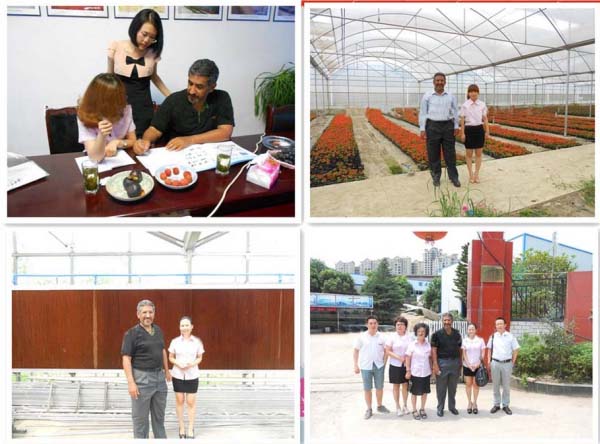
We are the manufacturer specializing in greenhouses with above 35 years, and our greenhouses are exported worldwide. A professional engineer department stands behind the drawing: if a customer requests it, our engineers travel to the buyer's country to guide the installation. Every year many customers visit the factory for business cooperation, and the photo below is from one of those visits.
If you need a question answered and some help finding the best greenhouse for your project, tell us the span, the height and the length you have in mind and we will come back with the configuration and the quotation drawn line by line.
Frequently Asked Questions:
Q: What span and height can this single-span film greenhouse be built in?
A: Spans of 6.4 m, 8 m, 9.6 m and 10 m, with a total structure height of 4.3 m to 6.5 m. The reference layout for this model is 64 m by 40 m, an area of 2,560 square metres.
A: Spans of 6.4 m, 8 m, 9.6 m and 10 m, with a total structure height of 4.3 m to 6.5 m. The reference layout for this model is 64 m by 40 m, an area of 2,560 square metres.
Q: How many layers of film does the house take, and how thick is the film?
A: It is designed for a single or a double layer. Covering film is quoted at 0.15 mm or 0.12 mm and the standard clear film supplied is 6 mil. A double layer traps an air cushion between the sheets, and that cushion is where the insulation comes from.
A: It is designed for a single or a double layer. Covering film is quoted at 0.15 mm or 0.12 mm and the standard clear film supplied is 6 mil. A double layer traps an air cushion between the sheets, and that cushion is where the insulation comes from.
Q: What wind load is this film greenhouse designed for?
A: The wind load listed for this house is 0.35 kN/m2. Wind is site specific, so tell us where the house is going and we will confirm the design figure and the frame that matches it.
A: The wind load listed for this house is 0.35 kN/m2. Wind is site specific, so tell us where the house is going and we will confirm the design figure and the frame that matches it.
Q: Which systems can be added around the shell?
A: Cooling and heating, irrigation, ventilation, fertilization, shading and benches. A shell price and a turnkey price are two different quotations, so say which of these you want included before the quotation is drawn up.
A: Cooling and heating, irrigation, ventilation, fertilization, shading and benches. A shell price and a turnkey price are two different quotations, so say which of these you want included before the quotation is drawn up.
Q: How is the greenhouse packed for shipping?
A: In three parts: metal structures, covering system and install accessories. Anything you need beyond those three is quoted as a separate item on the same quotation.
A: In three parts: metal structures, covering system and install accessories. Anything you need beyond those three is quoted as a separate item on the same quotation.
Q: Can the film be supplied cut to length?
A: Yes. Custom-cut lengths are available on many of the greenhouse film styles used here, so the film can be ordered to the length of the house instead of in fixed roll lengths.
A: Yes. Custom-cut lengths are available on many of the greenhouse film styles used here, so the film can be ordered to the length of the house instead of in fixed roll lengths.
If you need to ask a question and get some help to find the best greenhouse for you, then just call us on +86 191 5068 3942 or send E-mail to sales@cngreenhouses.com
Note: If you're interested in the product, please submit your requirements and contacts and then we will contact you in two days. We promise that all your informations won't be leaked to anyone.
 Deutsch
 Español
 Français
 Italiano
 Português
 日本の
 한국어
 العربية
 български
 hrvatski
 česky
 Dansk
 Nederlands
 suomi
 Ελληνικά
 हिन्दी
 norsk
 Polski
 Română
 русский
 Svenska